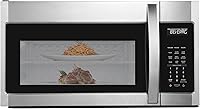
GE vs Samsung Over-the-Range Microwave: Which Is Better? (October 2026)
GE vs Samsung over the range microwave: pick the GE Profile for a little more cavity room, or the Samsung slim for the stronger 550 CFM fan and Wi-Fi control. Both are low-profile units, so the decision comes down to venting and the features you'll use.
On this page (16 sections)
- GE vs Samsung over the range microwave at a glance
- Height and fit for a low-profile opening
- Depth and the cabinet front
- Cavity room: 1.2 against 1.1 cubic feet
- Venting: 400 against 550 CFM
- Power and sensor cooking
- Connected features and controls
- Weight, the lift and the filler
- Install: a pro job for both
- Cleaning and upkeep on a slim unit
- How we scored each unit
- Which one to buy
- Who should skip each one
- Daily controls and the connected features
- Questions to ask before you buy
- GE vs Samsung over the range microwave: our pick
The GE Profile and the Samsung slim are both low-profile, 30-inch over-the-range microwaves. They sit short in the opening, so they suit kitchens where a standard unit won't fit under the cabinet.
The GE Profile gives you a little more room inside. The Samsung gives you the stronger fan and the connected features.
GE vs Samsung over the range microwave at a glance
Both units are slim models, around 10 to 11 inches tall, with a touch control panel and sensor cooking. The GE Profile is 1.2 cubic feet at 1000 watts, and the Samsung is 1.1 cubic feet at 1100 watts.
The biggest split is the fan. The GE Profile moves 400 CFM, and the Samsung moves 550 CFM through its hood vent.
 Best for a low-profile unit with sensor cooking
GE Profile 1.2 cu ft Low-Profile Over-the-Range Microwave
 Best for strong venting in a slim unit
Samsung 1.1 cu ft Smart Slim Over-the-Range Microwave
Use the sections below to match the two to your kitchen. The verdict at the end gives a simple rule for each buyer.
Height and fit for a low-profile opening
Both units are short enough for a low-profile opening, which is the main reason to choose either one. The GE Profile measures about 10.3 inches tall, and the Samsung measures about 10.8 inches.
If your opening is taller than about 11 inches, a standard unit may fit better than a slim one, so compare both sizes before you commit. Measure the height from the cooktop to the cabinet bottom before you order.
A short opening can rule out a standard unit, but it still needs room for the controls and the vent path.
Depth and the cabinet front
The GE Profile is about 18.6 inches deep, and the Samsung is about 19.1 inches deep. That half-inch gap matters less than the overall fit, but it can change how far the unit sits past the cabinet face.
Measure the depth from the cabinet front to the wall. If the cabinet is shallow, the deeper Samsung may need a closer check before you choose it.
Cavity room: 1.2 against 1.1 cubic feet
The GE Profile has 1.2 cubic feet of room, and the Samsung has 1.1 cubic feet. The difference is small, but it helps when you're fitting a large plate or a deep dish.
A slightly larger cavity helps most when the dish is wide rather than tall.
For most households, both sizes handle reheats and everyday cooking. The bigger cavity matters most if you use the microwave for batch cooking.
Venting: 400 against 550 CFM
The Samsung's 550 CFM hood vent is the stronger fan of the two, and it's the biggest reason to pick it. A stronger fan helps when you cook with high heat or often make smoke and steam.
The GE Profile's 400 CFM two-speed venting is still a solid fan for a low-profile unit. Both need a vent path that matches the kitchen, so the setup matters as much as the fan rating.
The venting options guide explains both setups.
Power and sensor cooking
The Samsung is rated at 1100 watts, and the GE Profile is rated at 1000 watts. For a quick reheat of a single plate, the gap between 1000 and 1100 watts is small.
The extra power helps a little on reheats, but the sensor cooking on both units does much of the timing for you.
Sensor cooking senses how much moisture the food gives off and adjusts the time, so it suits everyday meals. Manual power settings are there for food that needs them.
Connected features and controls
The Samsung adds Wi-Fi and voice control, plus an LED light bar. These features help if you like to start a cycle from a phone or set a timer by voice.
Check the setup steps in the manual before you rely on the app features.
The GE Profile puts its controls on the bottom edge and uses an integrated handle. Some cooks prefer that layout for a clean look.
Weight, the lift and the filler
The GE Profile weighs 51 pounds. Samsung doesn't give a weight for its slim unit, so check the installation sheet for it before you plan delivery.
Plan for two people on delivery day with either unit, and leave the overhead lift and the mount to the installer.
Ask the installer whether the opening needs a filler or trim kit for the sides. Buy any kit that matches the exact model number, since the fit depends on the model.
Install: a pro job for both
Both units plug into a household outlet and mount above the cooktop. A licensed electrician should check the outlet, and a qualified installer should mount the unit and check the vent path.
Neither unit is a do-it-yourself fit until those checks are done. The installation planning guide shows the steps a pro will run.
Cleaning and upkeep on a slim unit
Slim units have less interior height, so the cavity is quick to wipe after cooking. Take the turntable out when the manual allows, and check the manual before you use any cleaner.
Keep the vent grille clean, since grease buildup can slow the fan. Clean any filter the manual names on the schedule it gives.
How we scored each unit
Our score weighs specs, features and buyer feedback against what you're shopping for. The Samsung scores 8.1 for its fan, its connected features and its slim build, while the GE Profile scores 7.8 for its room and simple layout.
The scores reflect a low-profile kitchen, where venting and height come first. The Samsung's fan gives it the edge.
Which one to buy
Buy the GE Profile if you want a little more room, a simple layout and a slightly shallower footprint. It suits a low-profile kitchen where the venting is adequate and the features don't matter much.
Buy the Samsung if you want the stronger fan, Wi-Fi and voice control. It suits a kitchen where venting matters and you'll use the connected features.
Samsung over the range microwave for venting first
If the fan is the first thing on your list, the Samsung's 550 CFM hood vent is the stronger pick of the two. Check the vent path before you buy, since a strong fan still needs the right duct or filter setup.
The best low-profile over-the-range microwaves guide shows how both compare with other slim models.
Who should skip each one
Skip the GE Profile if venting is your top priority. The Samsung has the stronger fan, so it's the better match for a strong vent need.
Skip the Samsung if you want the most cavity room or a shallower footprint. The GE Profile is slightly shallower and holds a little more.
Daily controls and the connected features
Both units use touch controls and sensor cooking, so the everyday routine is similar. The Samsung adds voice and Wi-Fi control on top of that routine, which helps when your hands are full.
The GE Profile doesn't advertise Wi-Fi, so there's nothing to set up beyond its controls. That suits a household that wants a simple unit with no account to manage.
Questions to ask before you buy
A few questions help you choose between the two. Write the answers down next to the model numbers, UVM9125STSS and ME11A7710DS.
- Which vent setup does the maker recommend for a low-profile model in my kitchen?
- What clearance does the maker want above the cooktop and at the sides?
- Does the Samsung's Wi-Fi setup work with my home network before I mount it?
GE vs Samsung over the range microwave: our pick
For strong venting and connected features, the Samsung is the better pick. For a little more room in a simple, shallower layout, the GE Profile is the choice.
Measure the opening first, since both are short units. The complete over-the-range microwave guide covers the standard models for comparison.
The low-profile versus regular guide helps you decide whether a slim unit is the right size for your kitchen at all.
Frequently asked questions
Is the GE Profile or the Samsung slim a better low-profile microwave?
The Samsung has the stronger fan at 550 CFM and adds Wi-Fi and voice control. The GE Profile has a little more cavity room and sits slightly shallower, so the better pick depends on whether venting or room matters more to you.
Are both of these low-profile over-the-range microwaves?
Yes, both stand about 10 to 11 inches tall, which is shorter than a standard 30-inch unit. Measure the height from the cooktop to the cabinet before you order, since a low-profile unit only works if the opening is short.
Do these microwaves need a professional installer?
Yes, a licensed electrician should check the outlet, and a qualified installer should mount the unit and check the vent. Neither is a do-it-yourself fit until those checks are done.